Content Published 2018
From big data to smart data
The smart-data revolution makes big data usable: data is worth nothing until it is given a meaning, and the difference between volume and value, velocity and increment, variety and completeness, veracity and reliability is the difference between collecting data and being able to act on it.
By Gabriele Sirtori
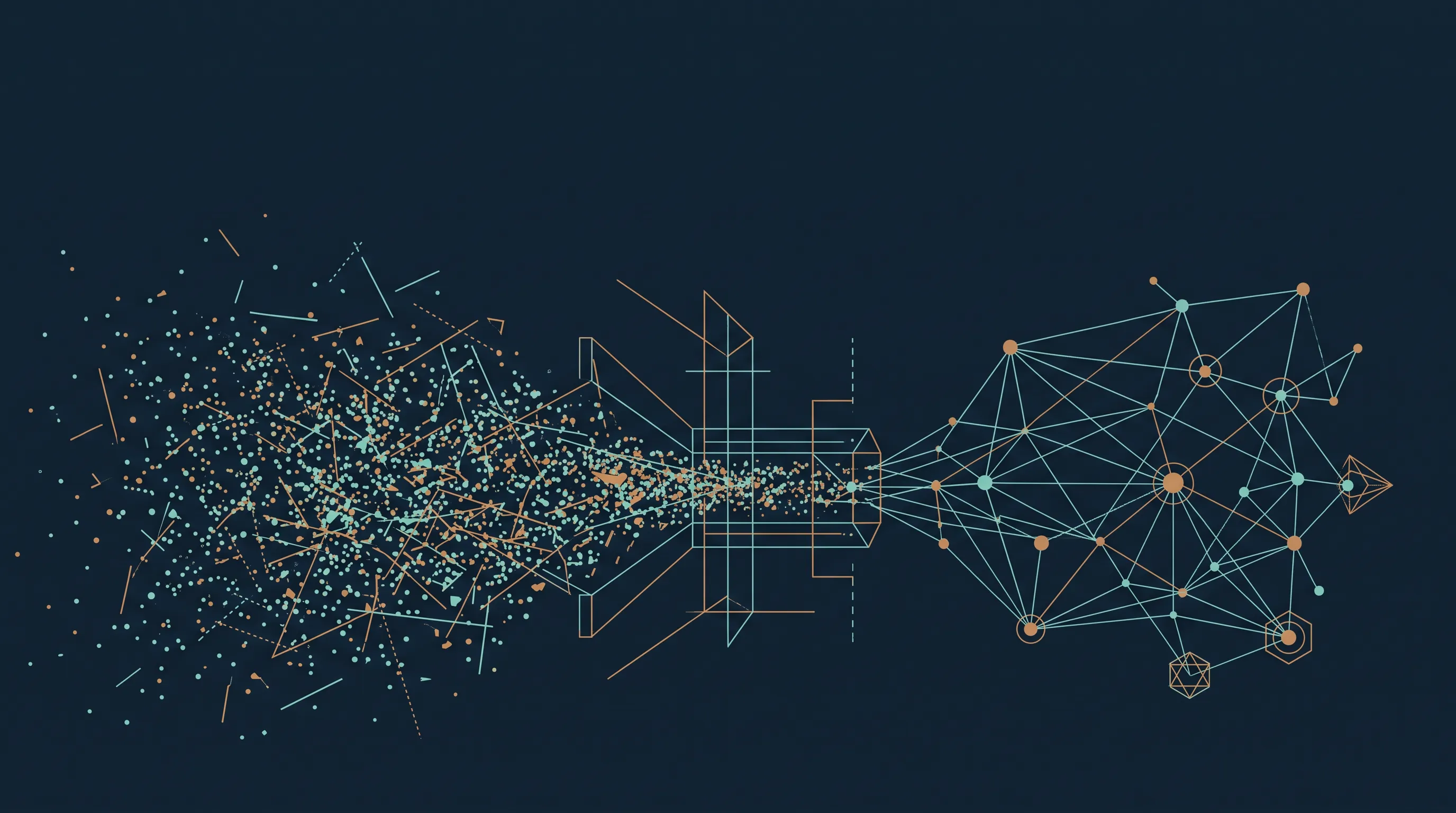
Today, one human being in two is connected to the internet — 3.58 billion people who every day use computers, smartphones, but also smart cars, home-automation systems, electricity meters connected to the web, and very much more besides. It is calculated that by 2020 there will be 28 billion connected devices in the world. A frightening figure that announces a great revolution in the way we conceive of the world and relate to it: to life, to work, to markets. Those devices, and the people who use them, produce an incredible quantity of data every instant: data on movements, preferences, hours of use, but also more private information such as that relating to health, or to economic and social wellbeing. These are the famous big data, a magic word spoken about for some years as something extremely futuristic, the brick with which our rosy future is to be built. Yet data is nothing until a meaning is attributed to it. And that is why the new frontier in the use of data has moved further ahead still: today we speak of smart data, a concept that joins the availability of large quantities of information to the need to accumulate it on criteria that make it readily applicable in executive and management work.
But let us proceed in order.
The latest great evolution of the internet
The web was born in 1996 from the minds of the team of engineers and scientists led by Tim Berners-Lee. It was born initially as a collection of texts linked to one another by keywords. The data available was limited and was generated only by those companies or individuals who, having bought a domain, put certain information online.
The first revolution, the one that had people talking about Web 2.0, arrived in 2003 with the boom in social networks: Friendster, the first successful social network, was born in 2002, MySpace in 2003, and in that period Facebook too saw the light, taking its first timid steps in February 2004. For the first time individual web users became not only content creators but also generators of data, traceable by the managers of the social networks and easily analysed.
The second great revolution is that of Internet 3.0, or the Internet of Things (IoT). No longer only human beings: the various technological tools too can now produce data, put it on the network, download it, read it and act accordingly. The smartphone was the pivot of this epochal turn: not so much the instrument that put the internet in our pocket, it was rather the instrument that definitively put us on the network. The devices we use today are great collectors of information such as our movements, our hours of sleep, our hours of use, our purchasing preferences, our features, our contacts. All of this is saved and kept in the very secure online servers of the companies that collect this data (Apple, Google, Facebook, …), often raising serious questions about its use. The internet, in other words, has become a great accumulator of data, a great database, with information generated not only by companies or people but also by machines — data which in turn can be used by other technological tools (the apps on our phones, for example, which use the internet without connecting to a browser).
The great revolution of web 3.0, that is the web as a great database, therefore consists in having at one’s disposal online large masses of accumulated data that keeps its semantic context — which makes the data easily linkable to one another and easily usable by tools that use artificial intelligence (search engines, analysis tools, but also machinery for industry). Web 3.0 therefore definitively marks the arrival of a new concept of data: linked data.
Figure: web architecture.
From big data to smart data
Collecting large quantities of data is not enough. Data alone means nothing if it is not possible to relate one datum to another. A shipping company has no use for the list of its customers’ addresses if it cannot then integrate that information with that of a mapping service, or with the list of the entity and quantity of its customers’ orders.
Volume is not enough: value is needed. This is the pivot of the passage from the concept of big data to that of smart data. Information has to be collected while keeping part of its meaning: no longer lists of words and numbers but sets of “addresses”, or “customer names”, or “types of parcel”. In this way the data is easily linkable to other data — hence the talk of linked data — and this can be done in very short times thanks to the devices and business software that use artificial-intelligence systems.
It is therefore also a passage from velocity to increment: the more I manage to accumulate and integrate data, the more I eliminate redundancies, overlaps and the data I no longer need to collect. The saving in time grows exponentially.
The use of linked data also allows a passage from the concept of variety, as much information as possible, to that of completeness: I collect all and only the information I need. There is therefore greater refinement. The idea of completeness then contains within it the idea of the glance: with the integration of various classes of data made available by smart data, I can have access, in a single moment, to analyses and reports generated by including in one explorable chart all the information required.
Finally it is also a passage from the veracity of big data, certainly true in that it is collected in various ways by machines and therefore difficult to manipulate, to the reliability of smart data: having a precise semantics and a minimal risk of redundancies lets companies have access to information that no longer has to be thinned out or cleaned up, because it is ready to use.
How to exploit smart data in business
Companies collect a myriad of data every day: sales statistics, the information gathered on customers, the performance of the various departments, … The challenge is to give a meaning, a semantics, to all this data so as to make it smart data and integrate it with other data by accumulating it in a “smart” database that is easy to consult and that we could call a knowledge base.
To do this the procedure is rather simple. LinkedData.Center, a leading company in the field of corporate data management, makes the “SDaaS” platform available to businesses, the acronym of Smart Data as a Service: a product capable of creating a “knowledge base” in a few weeks, starting from corporate datasets, in which corporate data will be accumulated in complete security according to the most modern storage protocols for smart data. This means that a company can easily integrate this data with the new information it collects over time.
An endpoint is also provided, a sort of gateway to this knowledge base, through which managers can put the questions they want to address to their own data and obtain quick answers.
The economic return of this operation for companies is enormous and measurable: it allows management times to be brought down, risk to be reduced, and the greatest possible control to be had over the state of the company and of its operations. The main players in the ICT world have been using smart data for years already: Google, IBM, Facebook and Microsoft, to name but a few. But now this revolution is taking hold in Italy too.
The moment to bring your company up to date has arrived. Play in advance, invest in your data.