Content Published 2021
The vaccine passport
The European Commission's Digital Green Certificate proposal, and the SSI-based solution LinkedData.Center had developed for it — a verifiable credential presented by QR code, with selective disclosure designed around the holder's privacy.
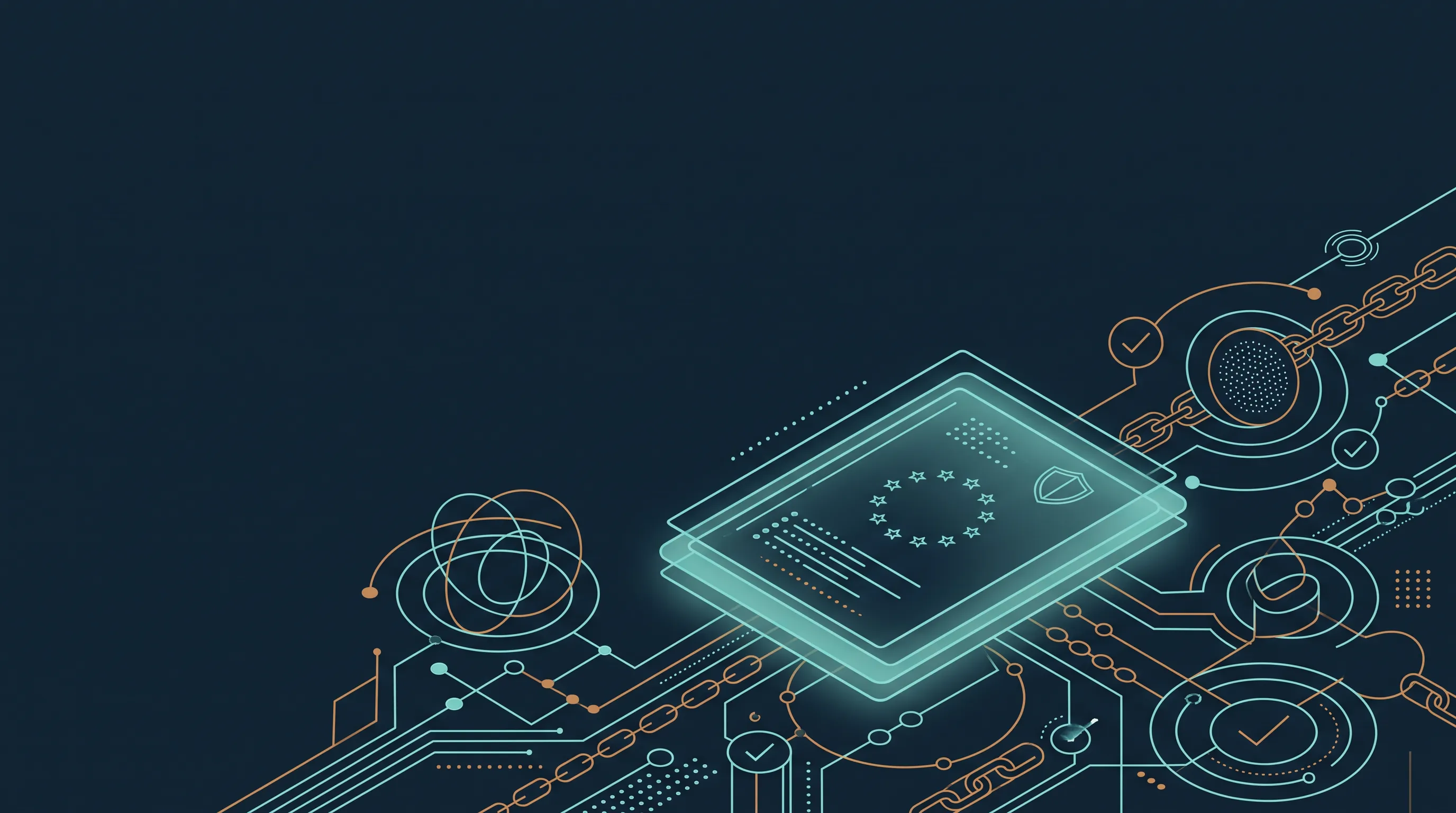
The European Commission has presented its legislative proposal for a kind of health passport — the “Digital Green Certificate” — with the aim of making free movement of people within the EU easier and safer. It would not be limited to proving that an individual has been vaccinated: in the absence of vaccination it would also give details of a negative Covid test (including rapid tests) or of the presence of antibodies after recovery. To be in force by mid-June, it would be available free of charge in digital or paper form, and should include a QR code to guarantee the certificate’s security and authenticity. “The new EU pass is at the moment intended to make the travel of European citizens easier and to restart tourism ahead of the summer,” said the EU Commissioner for Justice, Didier Reynders, and it would remain in force only for as long as Covid-19 is a pandemic.
It is a tool that standardises the instruments adopted so far to reduce the spread of the contagion: border checks, quarantines on entry, rapid tests.
For us at LinkedData.Center this is good news, because we have developed an SSI-based solution (the blockchain at the service of digital identity) able to do what the Digital Green Certificate requires.
Ready for use in autumn 2020, and presented under the name Amlet Care, our solution sends every vaccinated person or person who has taken a test a “verifiable credential” — a kind of digital certificate that attests to it. Through a digital-identity app acting as an e-wallet, each citizen can present their health status by scanning a QR code. Thanks to the use of SSI and its “selective disclosure” property (the ability to show only some information), the design is built around the user’s privacy: the verifier checks a health status without needing to know whether it was certified by a vaccine or by a test, and without having to ask for identity documents. Access to the e-wallet requires a biometric proof, so handing the phone to a third party is unnecessary.
One of the main reasons for public scepticism is that a digital passport would exclude millions of people who struggle to use a smartphone, or do not own one. For this reason we are collaborating with Cyphlens, an American startup created by an Italian, which can encrypt printed messages through innovative marks similar to QR codes and reveal their meaning with a smartphone app — cryptography in augmented reality. With this solution the name and surname of the certificate’s holder, and the related health information (vaccine or test?), can be masked and revealed only to those entitled to access them: law-enforcement and the staff carrying out checks.
Our company has also built a platform to enable this project, Amlet, and we are collaborating inside the Dizme ecosystem, promoted by InfoCert. Thanks to Dizme it is possible to manage certificates and digital identities in the SSI world; we hope to present our complete solution within a month, at the close of the “This is me” hackathon that has just started on the initiative of the DizmeID Foundation, in collaboration with Cariplo Factory. Stay tuned!
If you would like to go deeper, our then CEO Andrea Danielli has more in his article: Vaccine passport, what Europe proposes: what it is, how it will work and what role digital technology has.