Content Published 2025
Neural Linked Data
A conceptual manifesto for integrating neural models with the semantic and logical structure of Linked Data — its principles, goals, illustrative scenarios and a long-term vision of a semantic artificial brain.
By Enrico Fagnoni
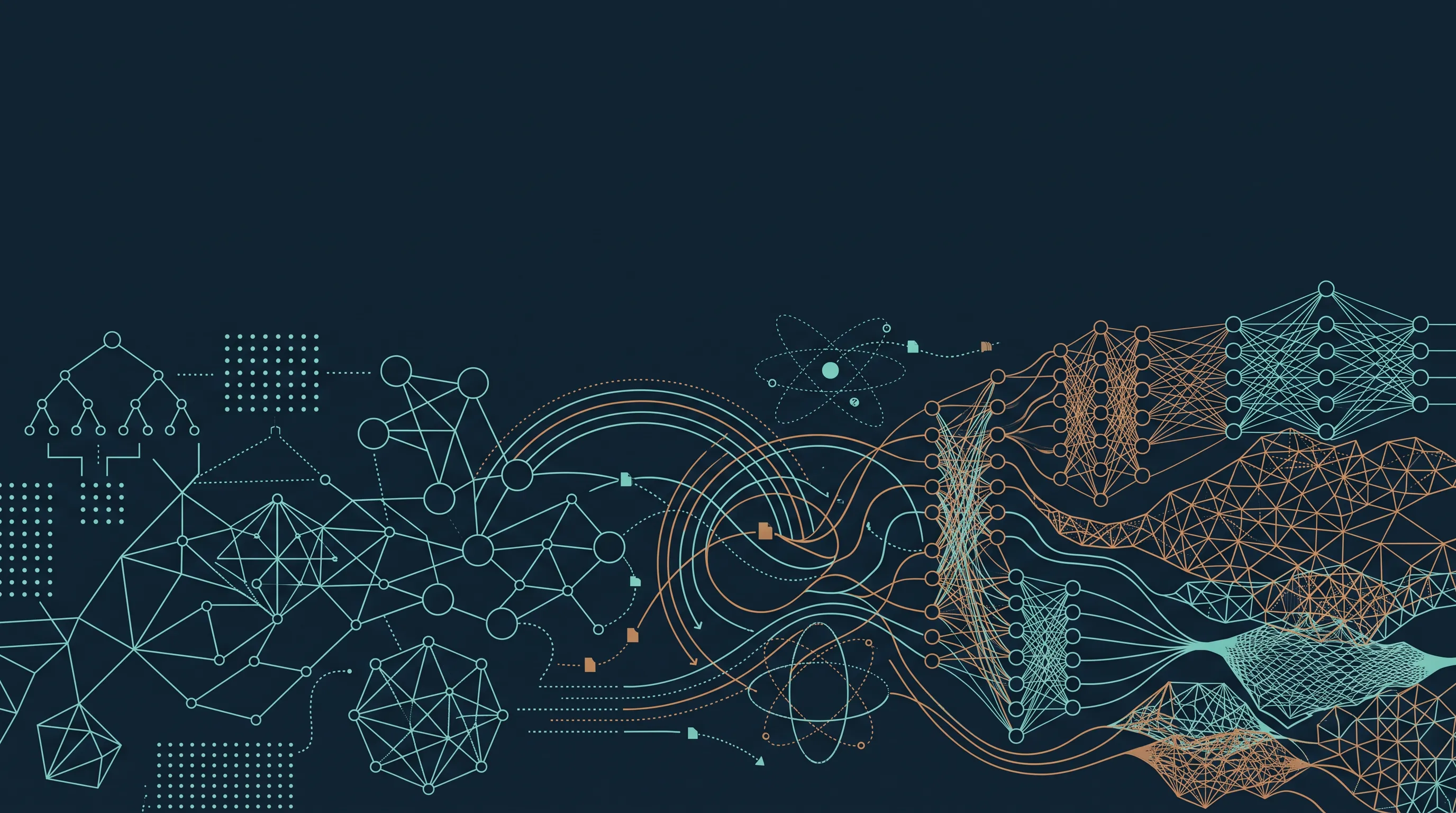
Neural Linked Data (NLD) is a paradigm that integrates neural models (deep learning, GNNs, LLMs) with the semantic and logical structure of Linked Data (RDF, OWL, ontologies, knowledge graphs).
The aim is to create systems that learn from unstructured data and at the same time reason symbolically, combining the adaptability of neural models with the transparency and structure of formal knowledge.
Principles
- Connection → data are living entities, represented as nodes and semantically defined relationships.
- Learning → neural models extract patterns, generalisations and latent representations.
- Reasoning → Linked Data provide ontological foundations, constraints and logical inferences.
- Explainability → every neural decision must be traceable and anchored to symbolic concepts.
- Evolution → Linked Data are enriched with new knowledge extracted by the neural models, creating a virtuous cycle.
Goals
- Overcome the dichotomy between “black-box learning” and “symbolic reasoning”.
- Enable interpretable AI thanks to the formal semantics of Linked Data.
- Strengthen the inference of neural systems through logical constraints and relations.
- Create cognitive ecosystems in which data, models and concepts feed one another.
Illustrative use cases
- Healthcare → neural networks that learn from medical images, but link diagnoses to clinical ontologies (SNOMED CT, ICD) to guarantee explainability and interoperability.
- Legal & Compliance AI → LLMs that understand legal texts, anchored to regulatory knowledge graphs, in order to justify decisions.
- Scientific Discovery → machine learning that finds patterns in experimental data, integrating them with semantic graphs of published knowledge.
- Conversational AI → chatbots that combine neural networks for linguistic understanding with Linked Data for precise, reliable and contextualised answers.
- Computational neuroscience → neural models that learn from the biological brain, represented as a semantic graph of regions, connections and functions.
These are conceptual scenarios that illustrate the paradigm; they are not implementations already delivered.
Long-term vision
Imagine a “semantic artificial brain”:
- the neural networks are the synapses that learn and generalise,
- the linked data are the symbolic memory that preserves, organises and explains,
- together they form an AI that not only recognises patterns, but understands and explains meanings.