Content Published 2018
More than 18 municipalities merged in the first quarter of 2018
In March 2018 eighteen new municipalities were created and forty-two were suppressed. How artificial intelligence helps to keep corporate records aligned with the official gazette.
By LinkedData.Center press office
How Italy is changing
Italy is changing — not only politically, but also in its administrative geography.
In the first months of 2018 alone, nineteen municipal mergers were approved, for a total of forty-two municipalities suppressed and eighteen new municipalities.
The regions affected by municipal mergers in 2018 are
- Calabria (1),
- Emilia-Romagna (1),
- Friuli Venezia Giulia (2),
- Liguria (1),
- Lombardy (4),
- Piedmont (5),
- Tuscany (2),
- Trentino-Alto Adige (1)
- Veneto (2).
With the establishment of the municipality of Montalto Carpasio, the first merger approved in Liguria is recorded.
As many as fourteen provinces are affected (CS, PC, IM, CO, LC, LO, MN, AL, AL, VC, AR, LI, PD, VI).
The territorial reorganisation already under way for some years continues — and, surprisingly, it has also seen the creation of a new province in Sardinia.
And our data?
In theory, at every change published in the official gazette every company should clean obsolete records out of its customer and supplier lists — not so much for legal reasons as to avoid contaminating its sales statistics and its analysis of its own data.
In practice this rarely happens, because it is genuinely a great deal of work, especially when the lists are large.
The result is a continuous and inexorable loss of quality in a corporate asset of great importance.
Fortunately artificial intelligence makes it possible to automate this kind of control, reading the official documents for you and flagging which of your records needs to be changed — or even applying the changes directly.
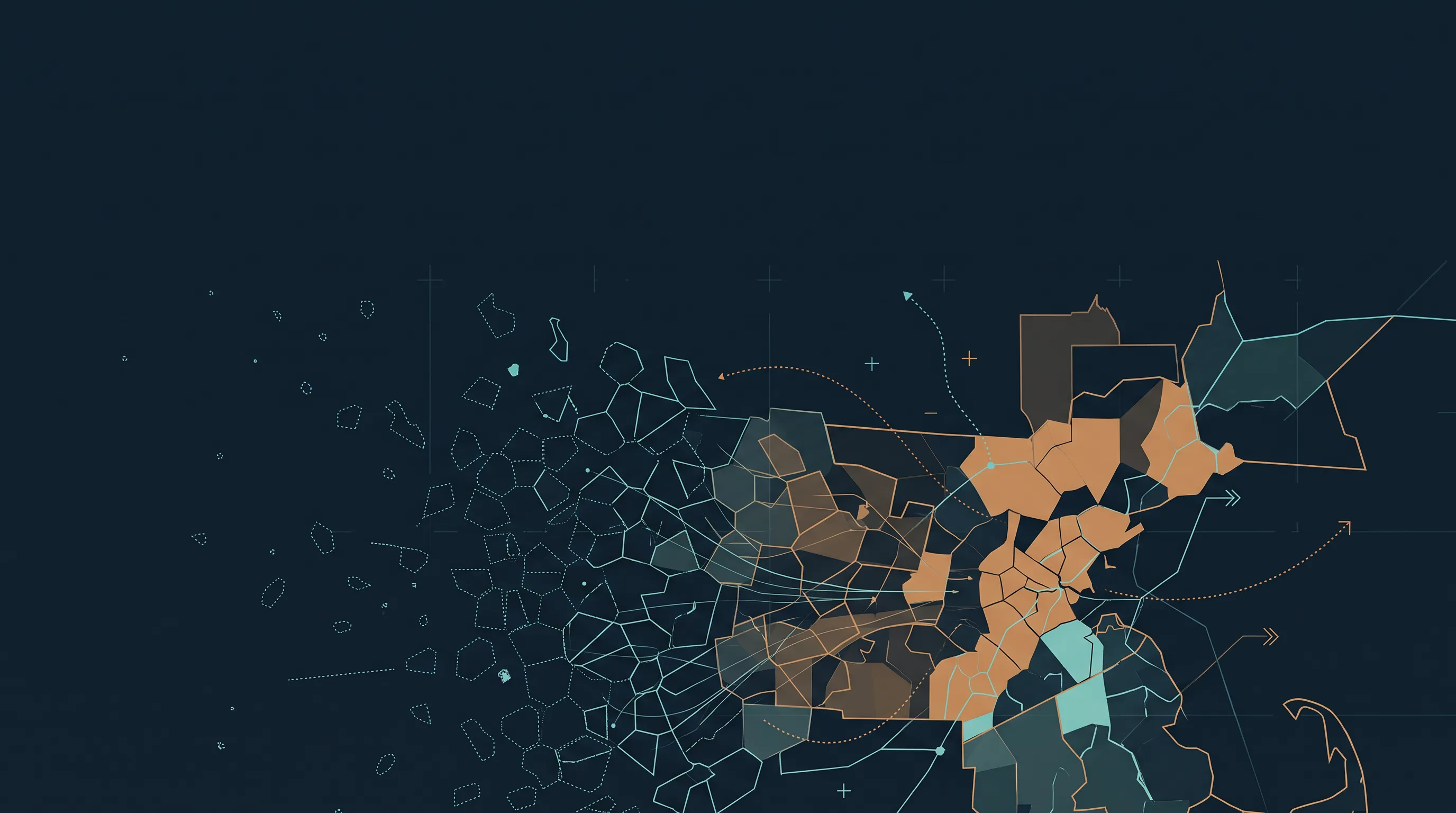
Figure: the source article’s illustration of automated record alignment.
The product of LinkedData.Center was designed precisely for this problem. SDaaS uses Semantic Web technologies and the new e-government functions to link your data to the official sources, so that it stays aligned at all times.
Find out more: SDaaS.